

A Special Issue of Folklore Dedicated to Chinese Folklore Has Been Published
06.09.2026
This special issue of Folklore: Electronic Journal of Folklore (Vol. 99), guest edited by Adam Grydehøj and Ping Su, offers a rich exploration of contemporary Chinese folklore and vernacular religion. Bringing together scholars from diverse disciplinary backgrounds, the volume examines how traditions, rituals, beliefs, and cultural heritage are continuously reinterpreted in response to social transformation, urbanization, digital media, and shifting political realities.
The issue opens with Grydehøj and Su’s theoretical introduction, Seeking the Present in the Past, which provides a valuable guide to current approaches in Chinese folklore studies and debates surrounding intangible cultural heritage. The articles that follow reveal the dynamic interplay between continuity and change in Chinese cultural life, addressing topics ranging from lineage narratives and heritage preservation to ritual performance, local festivals, religious practice, visual representation, and online expressions of magic and belief.
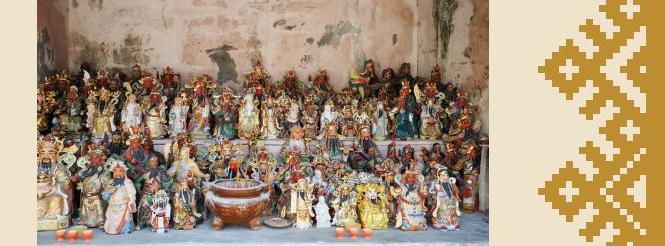
Among the highlights is What Gods Want: A Vernacular Religion Approach to Ritual Service Providers and the Desires of Deities in South China. Based on interviews with ritual specialists serving temples dedicated to the local deity Hou Wang, the authors challenge institutional models of religion by foregrounding practitioners’ own understandings of divine agency. Their findings demonstrate the remarkable diversity of religious thought that exists even within a shared local tradition and argue for the importance of vernacular perspectives in understanding the sacred.
The volume also explores how ritual practice shapes social relations and collective identities. An ethnographic study of Guangzhou’s Dragon Boat Festival interprets the celebration as a series of waterborne boundary rituals that maintain community connections within an increasingly urbanized landscape. Other contributions investigate the spectacularization of traditional opera through digital media, the preservation of ancestral narratives, and the transformation of customs under modern conditions.
Questions of gender, kinship, and social order emerge in a compelling study of ghost marriage in North China, where ritual practices surrounding unmarried deceased women illuminate broader tensions between continuity, emotional needs, and modern values. Together, these articles demonstrate how folklore provides an exceptional lens for understanding the negotiation of identity, morality, memory, and belonging in contemporary China.
Complementing the thematic focus on China, the issue includes a selection of internationally authored articles on folklore, ritual, mythology, performance, and cultural adaptation from diverse regions and traditions. These contributions expand the volume’s comparative perspective and underscore the continuing vitality of folklore studies in addressing both enduring human concerns and rapidly changing cultural realities.
Since 1996, Folklore: Electronic Journal of Folklore has served as an international, peer-reviewed forum for innovative folkloristic research. We invite readers to engage with this collection of studies that illuminate the resilience, adaptability, and creative power of cultural traditions in the twenty-first century.
Enjoy the read!
https://www.folklore.ee/folklore/vol99
Mare Kõiva & Tiina Ann Kirss